About Portable Half Cell - Sc-4 Ag/agcl
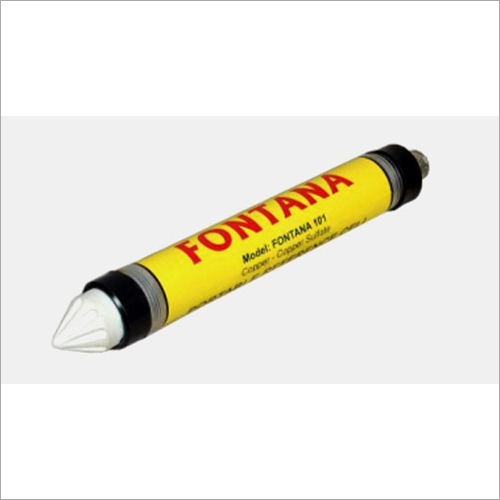
Portable Half Cell - Sc-4 Ag/agcl
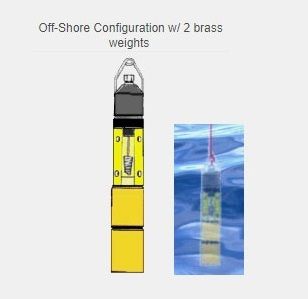
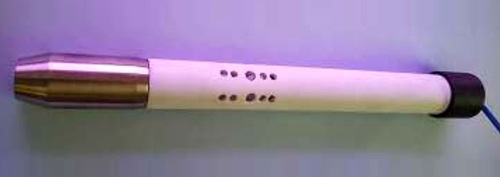
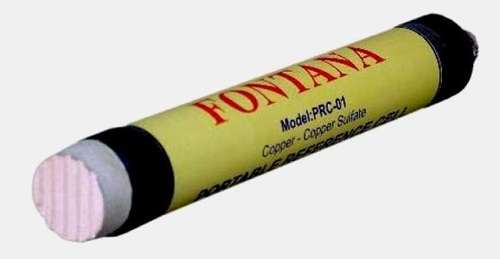
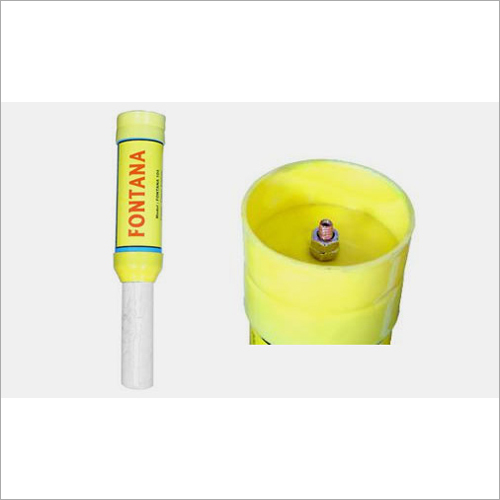
Tinker & Rasor offers high quality standards in our other products, can be found in our newest reference electrode kit. The SC-4 Ag/AgCl (silver/silver chloride) reference electrode kit includes all necessary components stored in a durable case for easy transport to the job. The SC-4 comes complete for use on Land or Sea.
Tinker and Rasor includes with the SC-4, our W-7 Waterproof Adapter. This is by far the strongest waterproof adapter available in the World. With pull strength of fifty times that of the wire connected to it, The W-7 is retrievable from great depths on even the most congested platforms. The stainless steel loop at the top of the W-7 insures against snags on most structures. For detailed supply, please contact us.
Reliable Corrosion MonitoringThe SC-4 Portable Half Cell enables fast, accurate corrosion potential assessment in diverse environments, such as reinforced concrete structures, soil, and water. Its factory-calibrated Ag/AgCl reference electrode with gel electrolyte ensures consistent results, while the 1000 mV measuring range covers typical monitoring needs. The analog meter provides real-time data essential for timely maintenance and safety decisions.
Designed for Tough EnvironmentsEngineered with a shock-resistant plastic shell, sealed gel electrolyte, and weather-tolerant design, this unit operates efficiently in both indoor and outdoor conditionseven in highly corrosive settings. The device supports a wide temperature (0C to 50C) and high humidity (up to 90% RH) range, making it suitable for field use across varied climates.
Easy Operation and MaintenanceWith its factory-set calibration and minimal maintenance requirements, the SC-4 electrode is straightforward to deploy. Occasional electrode cleaning is all that is needed to maintain performance. The included 1.5-meter cable allows flexible positioning, and the low power consumption (single 9V battery) ensures prolonged operation in remote locations.
FAQs of Portable Half Cell - Sc-4 Ag/agcl:
Q: How is the Portable Half Cell - Sc-4 Ag/AgCl used for corrosion monitoring?
A: The device is positioned on concrete, soil, or in water to measure corrosion potential relative to an Ag/AgCl reference. By connecting its cable to a compatible meter, users can read the analog output, helping assess the state of steel reinforcement or other metal structures in situ.
Q: What kind of environments can this electrode be used in?
A: It is suitable for both indoor and outdoor settings, including areas with corrosive atmospheres. The unit is designed to handle wide temperature and humidity variations, making it ideal for monitoring reinforced concrete, soil, or water in challenging field conditions.
Q: When does the electrode require recalibration or maintenance?
A: Factory calibration ensures accuracy, but user calibration can be performed if needed. Maintenance is minimalonly occasional cleaning of the electrode surface is required to keep measurements reliable. There are no frequent service needs under normal operation.
Q: Where is this product commonly applied?
A: The SC-4 is predominantly used in testing corrosion potential in reinforced concrete structures, but it can also be utilized in soil and water corrosion assessments. It finds application in civil engineering, infrastructure maintenance, and research in both public and private sectors across India and globally.
Q: What is the process for connecting and using the unit in the field?
A: To use the unit, connect its wired output to a portable meter, position the electrode at the desired location on the structure or surface, and read the analog meter value. The 1.5-meter cable gives you flexibility in positioning for accurate on-site testing.
Q: What benefits does the sealed gel Ag/AgCl reference design offer?
A: The sealed gel Ag/AgCl reference provides stable, low-drift potential readings, long shelf life, and reduced maintenance thanks to its gel-type chloride electrolyte. This design ensures dependable results, even in fluctuating field conditions and corrosive environments.








 Send Inquiry


 Send Inquiry


 English
 Spanish
 French
 German
 Italian
 Chinese (Simplified)
 Japanese
 Korean
 Arabic
 Portuguese