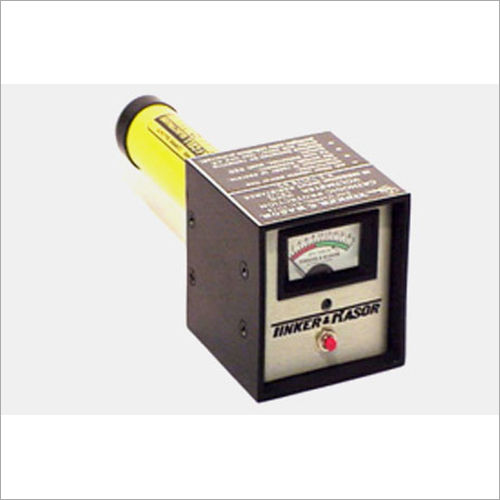
About CPV-2 Voltmeter - Tinker & Rasor
Technical Specification
Movement | 100 microamp |
Accuracy | +3% of full scale |
Sensitivity | 2 Volts DC full scale |
Scale | 1.25 (31.8 mm.) black features on white background |
Dimensions | Front panel: 3 (76.2 mm.) square. Total length with standard half cell: 8 1/4 (209.6 mm). |
Weight | 1 lb 6 oz (725 g) |
Portable and Rugged DesignThe CPV-2 Voltmeter stands out for its portability and durability. Its compact size, rugged high-impact plastic casing, and included carrying handle make it easy to transport and use in the field. The moisture-resistant housing protects the meter from environmental challenges, ensuring reliable operation for professionals working both indoors and outdoors.
Exceptional Accuracy for Cathodic ProtectionEngineered for cathodic protection professionals, the CPV-2 offers high-resolution results with a measurement range of 02 Volts DC and a resolution of 0.01 V. Its moving coil meter guarantees 1% full-scale accuracy, allowing precise monitoring of metallic structures and enhancing the reliability of your protective systems.
User-Friendly and Low MaintenanceOperating the CPV-2 is straightforward thanks to its analog display and direct lead connection. The device is powered by a single 9V alkaline battery and consumes minimal power, reducing the frequency of battery replacements. With copper-copper sulfate electrode compatibility and a simple setup process, the CPV-2 voltmeter is ideal for service providers, dealers, and manufacturers seeking reliable measurement solutions.
FAQs of CPV-2 Voltmeter - Tinker & Rasor:
Q: How is the CPV-2 Voltmeter used for cathodic protection measurements?
A: The CPV-2 is used by connecting its direct lead to the structure under test and a compatible copper-copper sulfate electrode to the reference point. It accurately measures DC voltage up to 2 Volts, providing critical data for assessing and maintaining cathodic protection systems in pipelines and metal tanks.
Q: What are the main benefits of the CPV-2 Voltmeter in field applications?
A: Key benefits include its rugged and portable design, high accuracy (1% of full scale), low power consumption, and moisture-resistant casing. Its ease of use and reliable analog readout make it ideal for consistent field and laboratory measurements, particularly in varied Indian environments.
Q: When should the 9V battery be replaced in the CPV-2 Voltmeter?
A: Replace the 9V alkaline battery when the analog display begins to show weak or unsteady readings, or as recommended during regular maintenance routines, to ensure accurate measurement performance.
Q: Where can the CPV-2 Voltmeter be operated safely?
A: The CPV-2 is suitable for use in both field and laboratory conditions. It operates reliably at temperatures from -10C to +55C and humidity up to 90% (non-condensing), making it ideal for diverse environmental conditions across India.
Q: What process should be followed to ensure accurate voltage readings?
A: Ensure the voltmeter and copper-copper sulfate electrode are properly connected, leads are not damaged, and the reference electrode is in good contact with the soil or electrolyte. Regular calibration and battery checks will help maintain accuracy within 1% of full scale.
Q: How durable is the CPV-2 Voltmeter for outdoor use?
A: The voltmeter is built with a high-impact plastic casing and rugged, moisture-resistant housing, providing excellent durability for outdoor and harsh environments. Its design withstands rough handling and ensures long-term performance.
Q: What usage precautions should be taken with the CPV-2 Voltmeter?
A: Avoid exposing the device to voltages outside its 02 V DC range to prevent damage. Always use compatible copper-copper sulfate electrodes and operate within the specified temperature, humidity, and pressure limits for optimal performance.








 Send Inquiry


 Send Inquiry


 English
 Spanish
 French
 German
 Italian
 Chinese (Simplified)
 Japanese
 Korean
 Arabic
 Portuguese