About Rapid Chloride Permeability Test Equipment
Technical specification
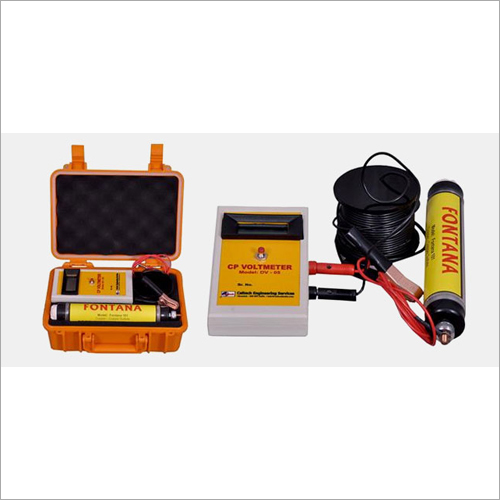
DV-05 | Rebar Corrosion Tester Kit |
Fontana-101F | Half Cell Reference Electrode |
DV-05DS | Dispensing sponge |
DV-05CR | Cable reel with 100 ft. (32 meters) cable |
DV-05 V | Half Cell CP Voltmeter |
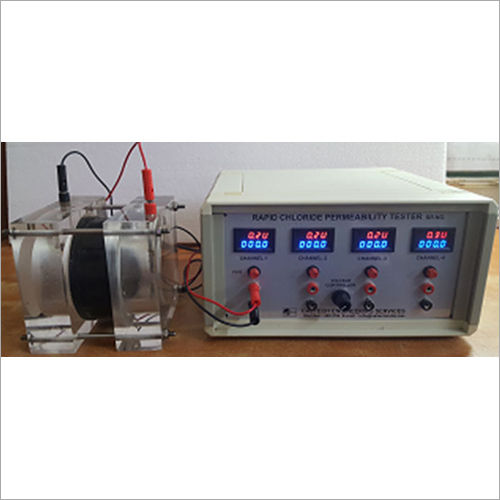
Precise and Reliable Chloride TestingAchieve dependable results in chloride permeability testing with ASTM C1202-compliant Standard Labs equipment. Suitable for both lab and field environments, this device enhances assessment reliability through factory calibration and NIST traceability. Its electrostatically painted finish and robust design ensure long-term, low-maintenance operation.
User-Friendly Operation and VersatilityFrom the digital LCD display to the intuitive preset timer and teflon-coated specimen holders, each feature has been optimized for straightforward, efficient workflow. The manual data logging supports comprehensive record-keeping, and the portable design allows easy transit between testing locations.
Safety and Durability Backed by Advanced EngineeringSafety is integral to the design, with overload and short-circuit protection built in. Its passive air cooling system ensures stable performance, and the powder-coated enclosure offers resilience in diverse conditions, supporting laboratory and on-site usage.
FAQs of Rapid Chloride Permeability Test Equipment:
Q: How does the Rapid Chloride Permeability Test Equipment comply with ASTM C1202?
A: The equipment is designed to meet all specifications of ASTM C1202, including test voltage, specimen dimensions, and data measurement for evaluating the permeability of concrete and mortar to chloride ions. Factory calibration with NIST-traceable standards ensures robust, reliable results.
Q: What is the process for using this equipment to test concrete specimens?
A: To conduct a test, secure a 50 mm thick or less specimen in the supplied teflon-coated holder, connect the measuring cables, set the digital timer for 6 hours, and initiate the test at 60 V DC. Upon completion, manually record the coulomb reading from the digital LCD display.
Q: Where can this permeability tester be used?
A: This equipment is versatile and portable, supporting both traditional laboratory setups and field environments. Its passive air cooling and protected enclosure permit operation in diverse sites around India within a 50C temperature and up to 85% relative humidity.
Q: When should the equipment be recalibrated?
A: The unit is factory calibrated using NIST-traceable standards to guarantee accuracy. Recalibration is recommended annually or after significant relocation or maintenance, in alignment with your quality assurance protocol.
Q: What are the benefits of using teflon-coated specimen holders?
A: Teflon-coated specimen holders provide superior chemical resistance and help ensure consistent, non-contaminating contact with each sample, which preserves sample integrity and enhances measurement reliability.
Q: How does the cooling system work during extended operation?
A: The equipment uses a passive air cooling system, which maintains operational stability without the need for mechanical components. This ensures quiet operation and minimal maintenance even during prolonged testing.
Q: What are the primary advantages of manual data logging?
A: Manual data logging offers users the flexibility to review, verify, and archive test results according to their required laboratory practices, helping maintain clear data trails and supporting compliance with internal and external standards.








 Send Inquiry


 Send Inquiry


 English
 Spanish
 French
 German
 Italian
 Chinese (Simplified)
 Japanese
 Korean
 Arabic
 Portuguese