
Call us now :07971549969
 Send Inquiry
 Send Inquiry
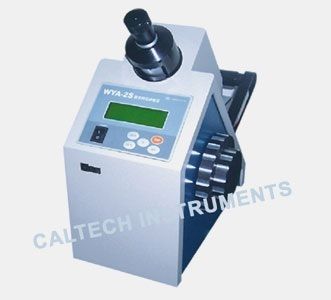
Digital Whiteness Meter
Price 50 INR/ Piece
MOQ : 50 Pieces
Digital Whiteness Meter Specification
- Diameter
- measuring aperture: 30mm
- Resolution
- 0.1 units
- Temperature Range
- 5C to 40C
- Equipment Type
- Digital Whiteness Meter
- Protection
- Overload and short-circuit protection
- Frequency
- 50 Hz
- Capacity
- Single sample measurement
- Humidity %
- 85%
- Measurement Range
- 0 - 120 units
- Application Media
- Paper, Textile, Plastic, Powder
- Sensor Type
- Photodiode sensor
- Connectivity Type
- Standalone / RS232 output optional
- Material
- Heavy-duty metal housing
- Power Supply
- 220V AC 10%, 50Hz
- Power Consumption
- 10W
- Accuracy
- 0.1 whiteness units
- Display Type
- Digital LED
- Range
- 0 - 120 whiteness units
- Weight
- 2.5kg
- Equipment Type
- Digital Whiteness Meter
- Sample Size
- Minimum 30mm diameter
- Dimension
- 240mm x 160mm x 100mm
- Light Source
- LED blue light
- Calibration
- Factory calibrated, self-calibration options
- Operating Method
- Touch Button / Auto Calibration
- Standard Accessories
- Calibration plates, power cable, sample holders
- Repeatability
- 0.2 whiteness unit
- Sample Holder
- Removable, easy-load design
Digital Whiteness Meter Trade Information
- Minimum Order Quantity
- 50 Pieces
- Supply Ability
- 500 Pieces Per Day
- Delivery Time
- 1 Week
About Digital Whiteness Meter
Technical Specification.
- Range of Measurement 0-100 Digital Display Type
- Zero Drift0.2/10min
- Resolution Ratio 0.1
- Display Drift0.3/3min
- Light Source 12V/30W Halogen Tungsten Lamp
- The Stability of Voltage Fluctuation 0.1
- Whiteness formula The Whiteness of Blue Light WB=R457
- The Reappearance of Measurement0.3
- Weight 1.8Kg
- Dimensions 260320280mm LWH
Precise and Reliable Whiteness Assessment
Achieve consistent and accurate whiteness measurements with this advanced Digital Whiteness Meter. Its auto calibration, touch button operation, and high repeatability ensure dependable results across diverse materials. Designed to support consistent quality control, every measurement is displayed on a clear LED interface for straightforward monitoring.
Versatile Application and Robust Design
Suitable for paper, textile, plastic, and powder samples, the meter is equipped with a removable, easy-load sample holder. Compact in size and built from heavy-duty metal, it fits seamlessly into laboratories or industrial settings. Overload and short-circuit protections further enhance its longevity and safety.
User-Friendly Operation and Connectivity
Factory pre-calibrated and self-calibration enabled, this device minimizes setup time. Sample loading is simple, and data can be output through optional RS232 connectivity for enhanced process integration. With a range of standard accessories included, users are equipped for reliable day-to-day operation.
FAQs of Digital Whiteness Meter:
Q: How do I operate the Digital Whiteness Meter and calibrate it for accurate readings?
A: Operation is streamlined with a touch button control for easy activation. The meter arrives factory calibrated, but also supports self-calibration using the included calibration plates for optimal accuracy. Detailed instructions are provided to guide you through the calibration process.Q: What types of samples can this whiteness meter analyze, and what is the minimum required sample size?
A: The device is suitable for a broad spectrum of materials including paper, textiles, plastics, and powders. To ensure reliable results, each sample should have a minimum diameter of 30mm, compatible with the measuring aperture and removable sample holder.Q: When should I recalibrate the meter and how often is calibration necessary?
A: Recalibration is recommended periodically, or whenever there is a noticeable drift in measurement accuracy. For most applications, self-calibration can be performed as needed following the user manual guidelines. Regular calibration ensures sustained high-precision results.Q: Where can this instrument be installed and used effectively?
A: Designed for laboratory, industrial, and production environments, the meter requires stable placement on a flat surface. It operates effectively within a temperature range of 5C to 40C and relative humidity up to 85%, powered by a standard 220V AC supply.Q: What is the measurement process for determining whiteness?
A: Begin by placing the sample in the easy-load, removable holder. Press the touch button to start the measurement; the integrated photodiode sensor and blue LED light source work together to assess whiteness. The digital LED display presents results instantly, ensuring a quick evaluation.Q: How does the Digital Whiteness Meter benefit quality control procedures?
A: This instrument offers high accuracy (0.1 whiteness units), excellent repeatability, and rapid results. It helps manufacturers and laboratories maintain consistent product quality by facilitating fast, reliable whiteness checks across batches and materials.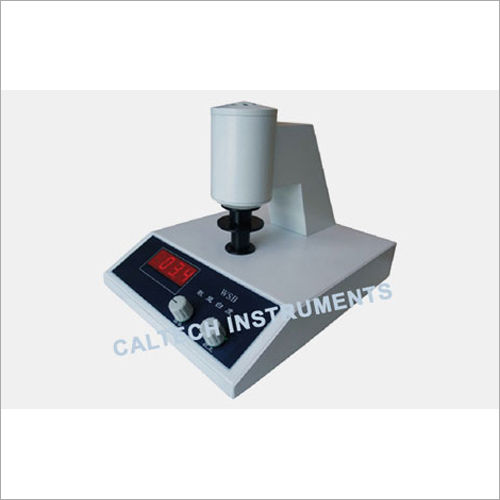
Tell us about your requirement

Price:
Quantity
Select Unit
- 50
- 100
- 200
- 250
- 500
- 1000+
Additional detail
Mobile number
Email

More Products in Color - Gloss - Colorimeter - Spectrophotometer - Category
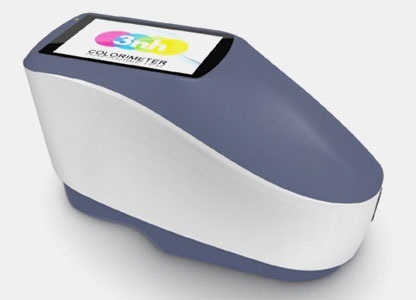
YS 3060 Grating Spectrophotometer
Price 50 INR / Unit
Minimum Order Quantity : 1 Unit
Display Type : Other, 2.8inch TFT color touchscreen
Range : Display range: L: 0~100
Resolution : Spectral resolution: 10 nm
Measurement Range : 400700 nm
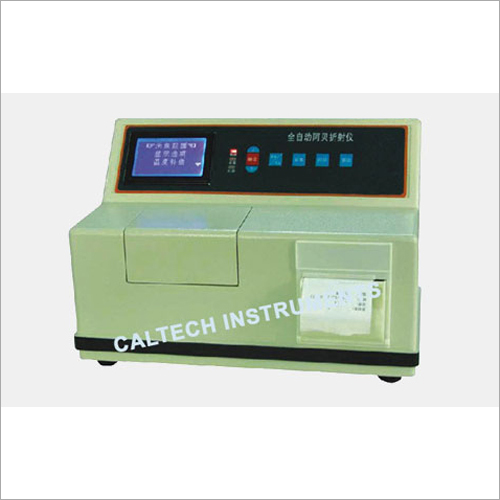
Automatic Digital Abbe Refractometer
Price 50 INR / Piece
Minimum Order Quantity : 50 Pieces
Display Type : Other, Digital LCD
Range : 1.3000 nD to 1.7000 nD
Resolution : 0.0001 nD / 0.01% Brix
Measurement Range : Brix 0~95%
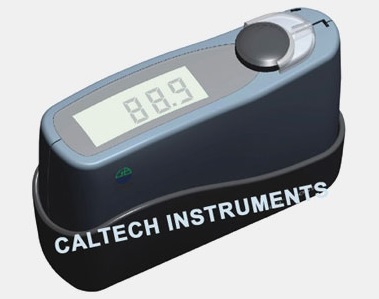
Basic Glossmeter
Price 50 INR / Unit
Minimum Order Quantity : 1 Unit
Display Type : Other, Digital LCD Display
Range : 0~200 GU
Resolution : 0.1 GU
Measurement Range : 0~200 Gloss Units
Digital Abbe Refractometer
Price 50 INR / Unit
Minimum Order Quantity : 1 Unit
Display Type : Other, Digital LCD Display
Range : 1.3000 to 1.7000 nD
Resolution : 0.0001 nD
Measurement Range : 1.30001.7000 nD / 095% Brix

 Send Inquiry
Our Products
- Coating Inspection
- Adhesion Tester
- Abrasion Testers
- Hardness Testers
- Scratch Testers
- Pinhole & Porosity
- Elasticity & Deformation
- Dry Film Thickness
- Surface Cleanliness & Surface Profile
- Wet Film & Powder Thickness
- Bar Coaters & Film Applicators Tools
- Oven Bath & Water Bath
- Color - Gloss - Colorimeter - Spectrophotometer -
- Rh - Dewpoint & Temperature
- Ink and Printing Instruments
- Inspection
- Performance
- Ultrasonic
- Viscosity Cups
- Viscometers
- Weathering Tester
- Publication
- Dispersing Mix - Mill Grind
- Cathodic Protection
- Instrument & Test Equipment
- Multimeter
- Clamp Meter
- Gas Detector
- Data Logger & CP Survey Equipment
- Current Interupter
- Power Supplies
- Soil Resistivity Meter
- Pipe & Short Locator
- Insulation Tester
- Holiday Detector
- Polarization Cell
- Reference Electrodes
- Cathodic Protection Tools
- Corrosion Testing
- Cathodic Disbondment Tester
- Corrosion Coupon
- Concrete Corrosion
- Nace Corrosion Test
- Coating Lab
- Pit Gauge
- Welding Inspection
- Gauges
- Inspection Torch & Mirror
- Digital Moisture Meter
- Concrete Moisture Meter



D-104, Twin Arcade, Military Road, Marol, Andheri East, Mumbai - 400059, Maharashtra, India

Mr. Rajeev J. Chaudhari
(Proprietor)
Mobile :07971549969
 Send Inquiry
 Send SMS
Developed and Managed by Infocom Network Private Limited.
