About Indentation Test - Low Temp
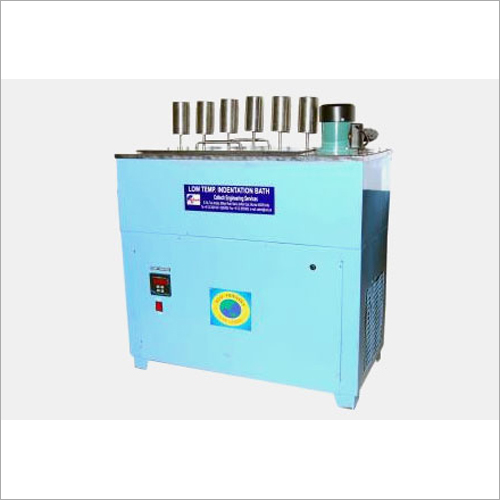
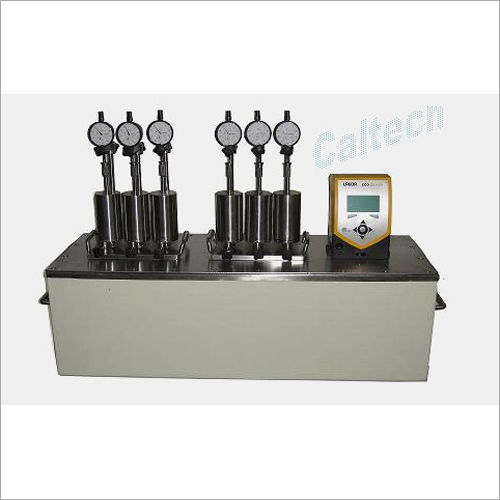
Technical specification
Construction | Stainless Steel |
External Body | Mild Steel Powder Coated |
Size of Bath | 285 x 165 x 530mm |
Control Panel | Automatic Control Panel |
Compressor | HP |
Controller | Electronic PID controlled |
Temperature | Ambient to 5 deg cent |
Sensor | PT-100 |
Timer | Digital timer 0-999.9 Hrs |
Std Weights | 2 Kg Stainless Steel |
Indenter | 0.250 Kg Suitable for above bath |
Dial Gauge | 0 to 5mm lc 0.010mm (06 Nos.) |
Magnetic Stand | To feet dial gauges with extra length (06 Nos) |
Stirrer | Motorized lab stirrer for water |
Precision Measurement for Rubber TestingThis indentation hardness tester ensures accurate evaluation of rubber materials at low temperatures using a 10 mm indenter. With programmable parameters and microprocessor control, users can rely on highly repeatable measurements. Its digital LED display and USB data output simplify analysis and documentation, supporting test applications in research, quality control, and manufacturing environments.
Durable Design and Advanced ControlsConstructed from mild steel with a durable powder-coated finish in blue-grey, the device withstands demanding laboratory conditions. It integrates modern sensor technology (strain gauge) and PID heating for consistent temperature management. Overload protection ensures safety during operation, while standalone connectivity supports flexible usage in different settings.
Compliance and Easy OperationSuitable for Indian and international standards, the tester offers a wide temperature and humidity operating range, catering to various environments. Its simple interface allows fast setup and smooth testing process, while the USB connectivity facilitates efficient data management for dealers, distributors, and manufacturers.
FAQs of Indentation Test - Low Temp:
Q: How is the Indentation Hardness Tester operated for low temperature rubber testing?
A: The tester is operated using its microprocessor-based controls and digital LED display. The user programs the required temperature within the -10C to +50C range, places the sample (min 50 x 50 mm), and initiates the test. The device uses a PID-controlled heating system for stable conditions and a 10 mm indenter to perform indentation.
Q: What standards does this indentation test equipment comply with?
A: The equipment complies with both IS 3400 (Part 22) and ASTM D1321 test methods, ensuring precise and reliable results for rubber hardness measurement at low temperatures.
Q: When should I use this tester instead of other hardness measurement devices?
A: This tester should be used when you require accurate hardness measurements of rubber samples at low or programmable temperatures, especially in environments that meet the tests specified humidity and temperature ranges.
Q: Where can the data from the indentation test be exported or analyzed?
A: Test data is easily exported via the built-in USB interface, allowing users to transfer measurement results to any compatible computer or analysis software for storage or further examination.
Q: What is the process for preparing a sample for this indentation test?
A: Samples must be at least 50 x 50 mm in size. After conditioning the rubber to the desired temperature, place it on the test platform and ensure correct alignment with the indenter for accurate measurement.
Q: How does overload protection benefit the user during operation?
A: Overload protection safeguards both the tester and the sample by automatically preventing excess loads, ensuring consistent results and prolonging equipment lifespan during repeated industrial usage.
Q: What are the advantages of the digital LED display and USB connectivity?
A: The digital LED display provides quick, clear readouts, and the USB connectivity allows simple, fast export of test data. Together, they streamline the testing workflow and facilitate effective documentation and analysis.








 Send Inquiry


 Send Inquiry


 English
 Spanish
 French
 German
 Italian
 Chinese (Simplified)
 Japanese
 Korean
 Arabic
 Portuguese