About Pencil Hardness Tester
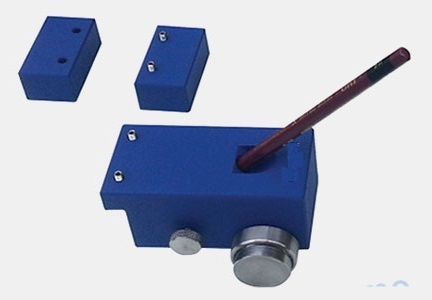
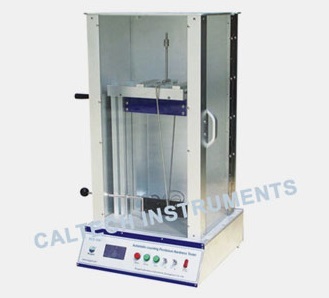
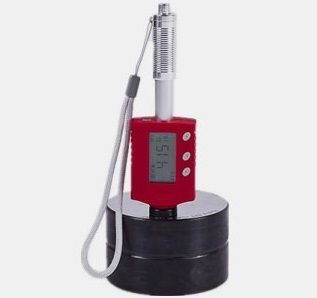
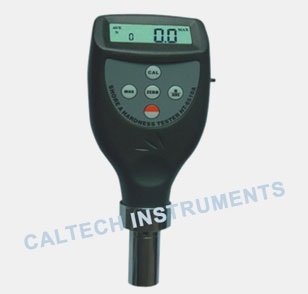
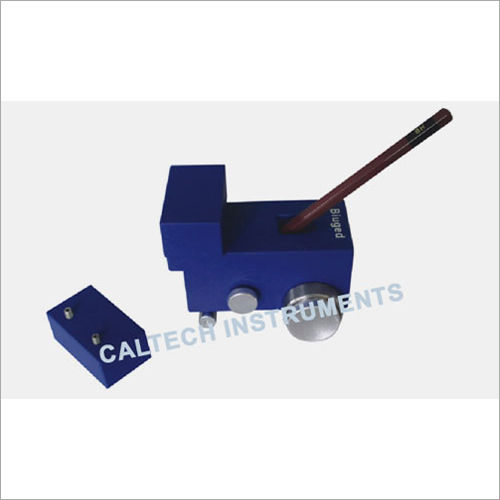
Caltech India offers Pencil Hardness Tester will determine the hardness or scratch resistance of painted surfaces on horizontal and vertical planes. Small and portable can be used in virtually any location. Traceable test method uses high quality hardness graded pencils. Choice of graded pencil set is supplied as per choice.
We also supply adjustable pencil hardness tester with 500, 750, 1000gms load to applied on surface. Adjustable Pencil Hardness Tester has level spirit level bottle to insert leveled pencil in the hardness tester.
MITSUBISHI Hardness Pencil and Staedtler Hardness Pencil as per choice of customers are also supplied.
High-Precision Manual TestingBenefit from high-precision manual testing with a resolution of 1 grade increment. The Pencil Hardness Tester uses a mechanical/manual sensor, delivering consistent, repeatable results for coating hardness evaluation. Its ergonomic design makes operation straightforward and reliable.
Built for Durability and ComplianceWith a sturdy stainless steel and aluminium body paired with powder-coated protection, the tester is built for environmental resilience. It complies with ASTM D3363 and ISO 15184 standards, ensuring trust in both laboratory and industrial settings.
Simple Analogue OperationFeaturing an analogue display and fixed holder, usage is intuitive and efficient. The manual movement system eliminates the need for electrical power, making it suitable for use anywhere within the specified temperature and humidity ranges.
FAQs of Pencil Hardness Tester:
Q: How does the Pencil Hardness Tester measure the hardness of coated surfaces?
A: The tester measures surface hardness by applying a standardized test load of 750 grams via a pencil tip onto the coated media. By progressively using pencils from 6B to 9H, it helps determine the hardest pencil that does not mark or scratch the surface, following ASTM D3363 and ISO 15184 procedures.
Q: What applications is this instrument suitable for?
A: This tester is ideal for assessing hardness on coated surfaces such as paint, varnish, and lacquer. It is widely used in laboratories, manufacturing facilities, and quality control environments for testing surface resistance to scratching.
Q: When should a pencil hardness test be performed on coatings?
A: Hardness testing is recommended after the coating has fully cured, typically as part of routine quality inspection, research, or product certification processes to validate scratch resistance and durability according to international standards.
Q: Where can the Pencil Hardness Tester be used?
A: Due to its manual operation and compact design, the tester is suitable for use in laboratories, workshops, production lines, and onsite inspection environments. It operates reliably within 10C to 40C and up to 85% relative humidity, provided conditions remain non-condensing.
Q: What is the process for conducting a pencil hardness test with this device?
A: Simply load a pencil into the 8 mm diameter holder, set the device on the coated surface, and manually move the tester according to the fixed angle and force design. Use pencils of increasing hardness until the first visible mark appears, identifying the coatings hardness grade.
Q: How does the fixed angle and force holder benefit testing accuracy?
A: The fixed holder design maintains consistent angle and test force throughout operation, minimizing user variability and maximizing test repeatability. This ensures precision readings, with accuracy up to 0.1 mm, across different surfaces and operators.
Q: What are the advantages of using a manually operated, analogue pencil hardness tester?
A: The manual/analogue design provides reliable, consistent results without dependency on batteries or power supply. It is straightforward to use, highly durable, and easy to transport, making it a cost-effective solution for regular hardness assessment of coated materials.








 Send Inquiry


 Send Inquiry


 English
 Spanish
 French
 German
 Italian
 Chinese (Simplified)
 Japanese
 Korean
 Arabic
 Portuguese