Small Aperture Gloss Meter About
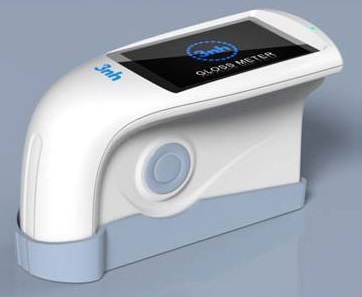
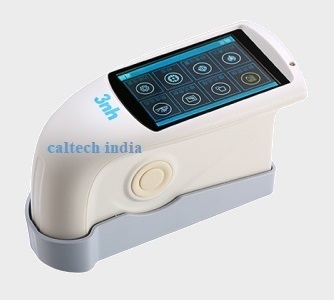
Caltech India offers NHG60M small aperture gloss meter. NHG60M gloss meter adopts small aperture 1.5*2mm, with 60 angle, manufactured according to ISO2813 and GB/T 9754. It is also compatible with the standards of ASTM D523, ASTM D2457. NHG60 conforms to JJG696 first class gloss meter working requirement, corresponding with CIE 1931(2) under CIE C light source.
NHG60M small aperture gloss meter can test material with gloss (0-1000Gu), and universally apply to paint, ink, shoving varnish, coating, wood products; marble, granite, vitrified polished tile, pottery brick and porcelain; plastic, paper; hardware industries, etc. for gloss measurement and gloss data transmission.
Most economical digital small aperture gloss meter price in India. We also provide calibration services for gloss meters
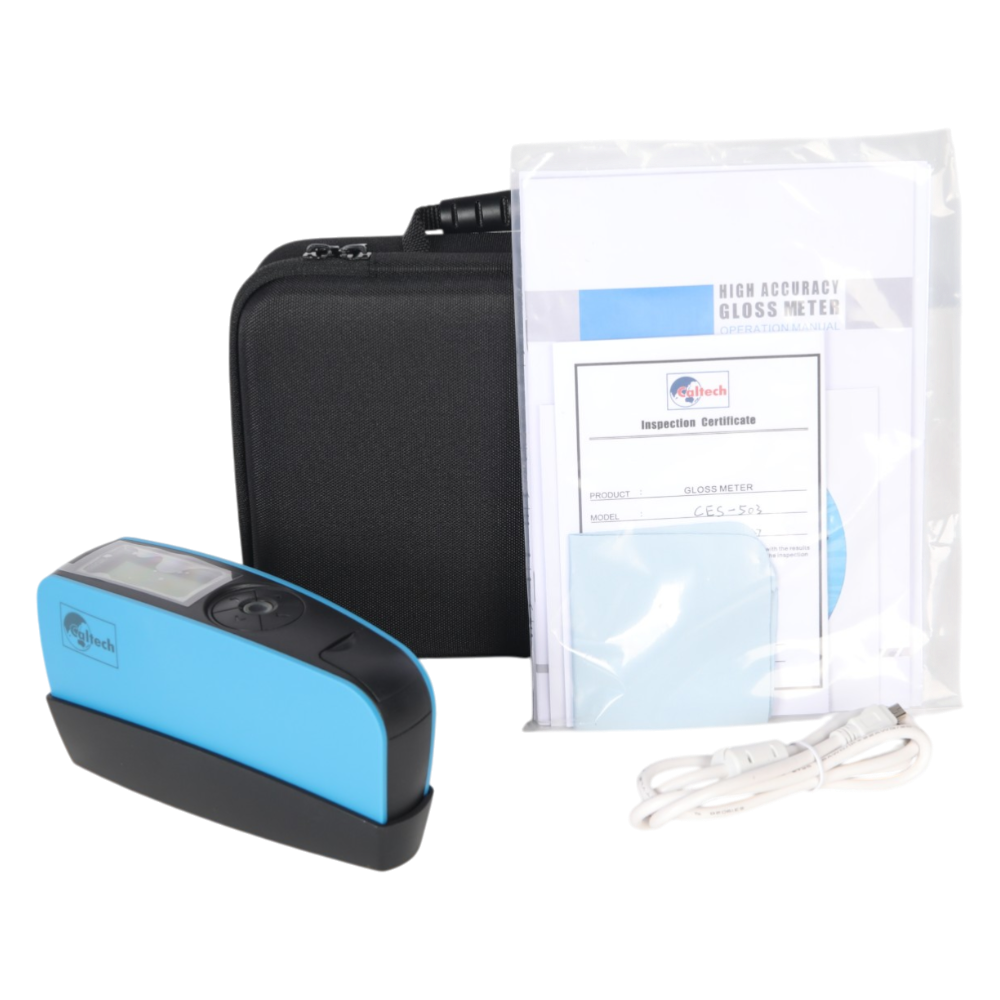
Gloss meter is supplied with Main Device, Holder with Working Standard, Traceable Certificate, Glossmeter Data Operator Software, Cable for PC Serial port, USB Adapter, optional, Users Manual, Carrying Bag Gloss meter with quality, durability and economical priced now available from leading supplier in India
Dual Calibration Methods Enhance PrecisionThe gloss meter offers both automatic and manual calibration, catering to different user preferences and scenarios. This dual approach ensures reliable readings regardless of conditions, providing flexibility to laboratories, production lines, or quality control environments. Calibration in accordance with ASTM D523 and ISO 2813 standards further ensures trustworthy and consistent results.
User-Friendly Operation and Data ManagementWith single or continuous measurement modes, the device adapts seamlessly to various workflow needs. Its digital LCD display and USB data output simplify reading, reviewing, and exporting up to 1000 stored measurements. The gloss meter is lightweight, portable, and features auto power-off to conserve battery life, making it practical for field and laboratory use alike.
Versatile Applications in Diverse IndustriesThe small aperture design enables accurate gloss measurements on tight or uneven surfaces, making it ideal for industries handling paint, coatings, plastics, ceramics, and printing ink. The rugged ABS plastic housing and the included protective carrying case add durability, while the compact size is perfect for convenient transport and use on-site or in production facilities.
FAQs of Small Aperture Gloss Meter:
Q: How do I calibrate the Small Aperture Gloss Meter?
A: Calibration is straightforward and can be performed automatically or manually. To calibrate, follow the devices instructions using the provided calibration standard, ensuring the meter meets ASTM D523 or ISO 2813 requirements before measurements for best accuracy.
Q: What surfaces and materials can this gloss meter measure?
A: The meter is suitable for measuring gloss on a variety of materials, including paint, coatings, plastics, ceramics, and printing ink. Its small 6 x 4 mm aperture allows precise readings even on narrow or curved surfaces.
Q: When should I use single versus continuous measurement mode?
A: Single mode is ideal for spot checks or individual readings, while continuous measurement mode is best for scanning larger areas or when multiple readings are necessary in rapid succession. Choose the mode based on the specific application and measurement needs.
Q: Where can I review and manage my gloss measurement data?
A: You can view readings directly on the devices digital LCD display. For more detailed analysis and record-keeping, up to 1000 measurements can be stored and later exported via the built-in USB data output to a computer.
Q: What is the process for taking accurate gloss readings with this device?
A: Begin by ensuring the meter is correctly calibrated. Place the aperture flat against the surface to be tested, select either single or continuous mode, and press the measurement button. Readings will display within one second, with high accuracy and repeatability.
Q: What are the benefits of the small aperture design?
A: The compact 6 x 4 mm aperture allows the gloss meter to access hard-to-reach areas and measure gloss on small, curved, or detailed components, making it particularly beneficial for precision applications in quality control and production.
Q: Does the gloss meter automatically power off, and how does this help?
A: Yes, the device features an auto power-off function to preserve battery life, which is especially useful during field measurements or prolonged periods between readings. This ensures the meter remains ready for use and reduces unnecessary battery consumption.








 Send Inquiry


 Send Inquiry


 English
 Spanish
 French
 German
 Italian
 Chinese (Simplified)
 Japanese
 Korean
 Arabic
 Portuguese