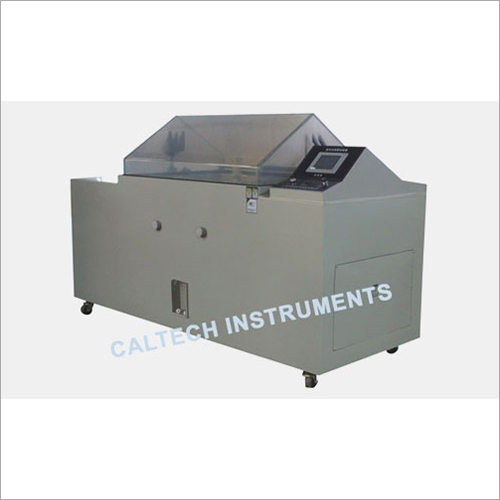
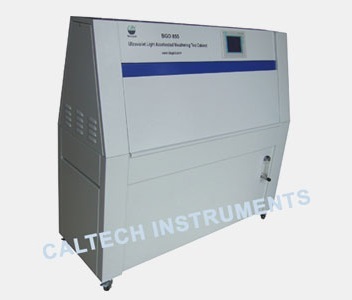
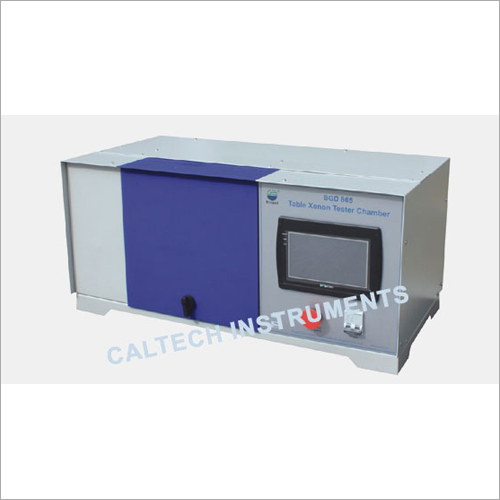
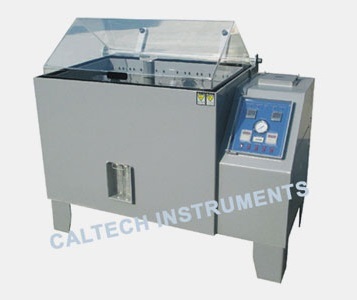
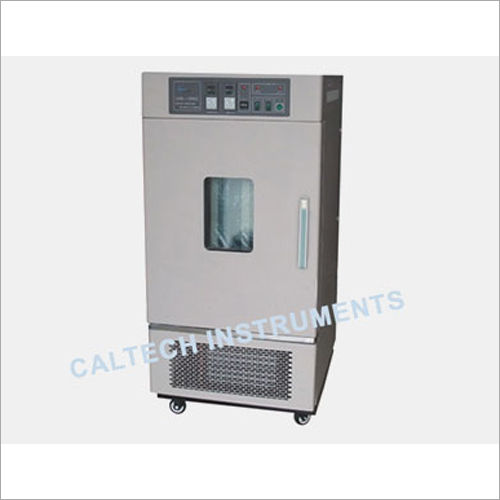
About Cyclic Corrosion Test Cabinet
Technical Specification
Ordering Information
Technical Parameters | BGD 886 | BGD 887 | BGD 888 |
Temperature Range | RT +2060 |
Temperature Stability | 2 |
Temperature Uniformity | 2 |
Humidity Range | 45%100% |
Humidity Deviation | 3% RH |
Sedimentation speed of salt fog | 0.52ml/80cm2.h |
Spray Mode | Continuous Spary or Period Spray |
Spray Time | Can set from 19,999H,M.S |
Work Room DimensionDWH | 7501100500 | 850130600 | 9002000600 |
Overall DimensionDWH | 110017001250 | 115021001550 | 125028001600 |
Total Power | 4 kw | 5 kw | 6.5 KW |
Power Supply | AC 380V10% 50HZ |
|
|
Gloss Weight | 175Kg | 300Kg | 500KG |
Advanced Corrosion Testing CapabilitiesThe cabinet provides versatile, programmable multi-phase corrosion cycles through a user-friendly microprocessor controller, enabling simulation of diverse environmental conditions. Users can tailor cycle settings, including temperature and humidity, for comprehensive material degradation studies and product development.
Superior Construction and SafetyBuilt with high-grade FRP and double-layered insulation, the cabinet is robust and energy-efficient. Safety features include over-temperature, low water, and over-pressure protection mechanisms. Observations are simplified via a transparent acrylic window, and automated drainage ensures hassle-free cleaning and maintenance.
Efficient, Uniform Testing ProcessUniform atomization assures consistent fog distribution throughout the cabinet, providing reliable exposure for each sample. The chamber accommodates up to 480 liters and holds a salt solution capacity of 40 liters, suitable for rigorous cyclic corrosion simulations in industrial laboratories or manufacturing quality control.
FAQs of Cyclic Corrosion Test Cabinet:
Q: How does the programmable controller improve the cyclic corrosion test process?
A: The microprocessor-based programmable controller allows users to configure highly specific, customizable multi-phase test cycles. This capability enhances flexibility, ensuring accurate simulation of real-world environments and replicable testing protocols for diverse applications.
Q: What benefits does the double-layered FRP construction offer?
A: The double-layered high-grade FRP construction provides excellent insulation, maintaining a highly stable test environment. This not only conserves energy but also ensures consistent test results across long-duration or demanding cycles.
Q: When should the automatic drainage and flushing system be used?
A: The automatic drainage system activates after designated test cycles or during maintenance to efficiently remove used test solutions and flush the chamber, reducing downtime and contamination risks between tests.
Q: Where is the ideal application for this corrosion test cabinet?
A: This cabinet is best employed in laboratories, R&D centers, and manufacturing quality control facilities that require advanced corrosion testing for automotive, aerospace, coatings, and metal product validation.
Q: What is the process for observing samples during testing?
A: Samples can be easily monitored through the transparent acrylic viewing window. The window is designed for optimal visibility while maintaining chamber integrity and sealing, allowing real-time assessment without disrupting test conditions.
Q: How is sample mounting managed inside the chamber?
A: Sample holders made from stainless steel 316 are supplied for optimal corrosion resistance and durability. These holders securely position samples, ensuring uniform exposure to spray and temperature gradients during the entire test sequence.








 Send Inquiry


 Send Inquiry


 English
 Spanish
 French
 German
 Italian
 Chinese (Simplified)
 Japanese
 Korean
 Arabic
 Portuguese