UCI Portable Hardness Tester About
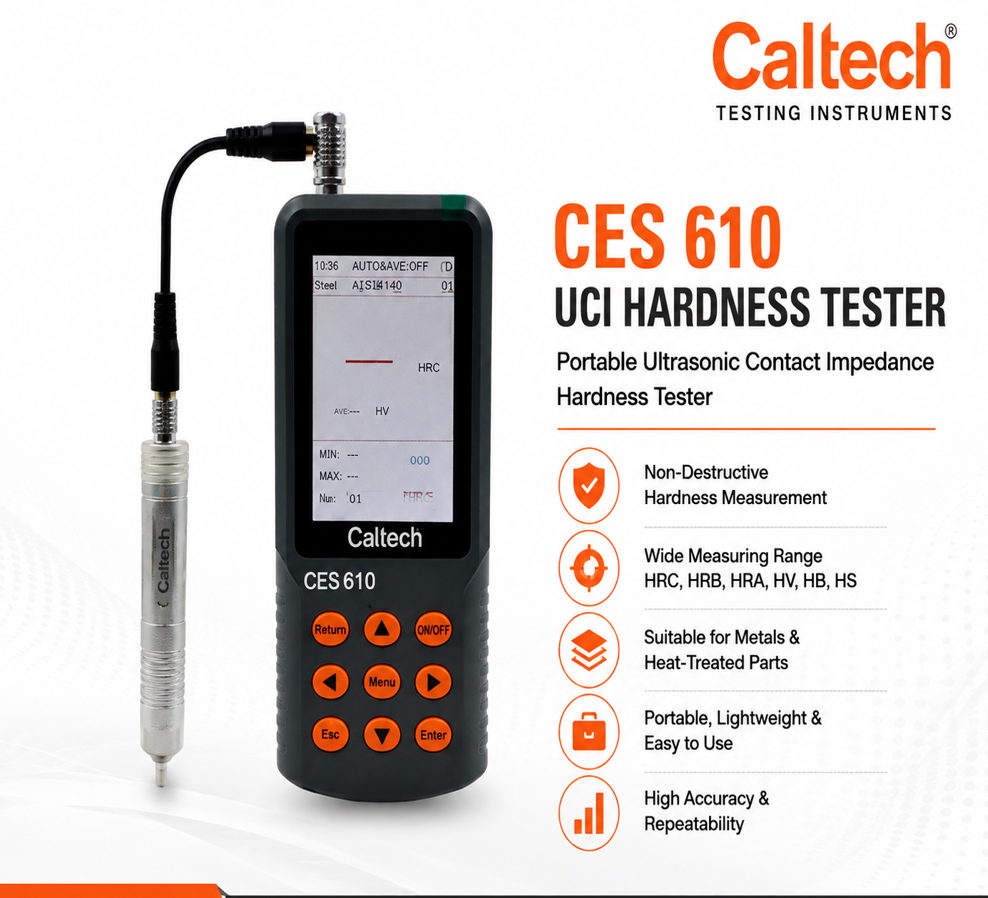
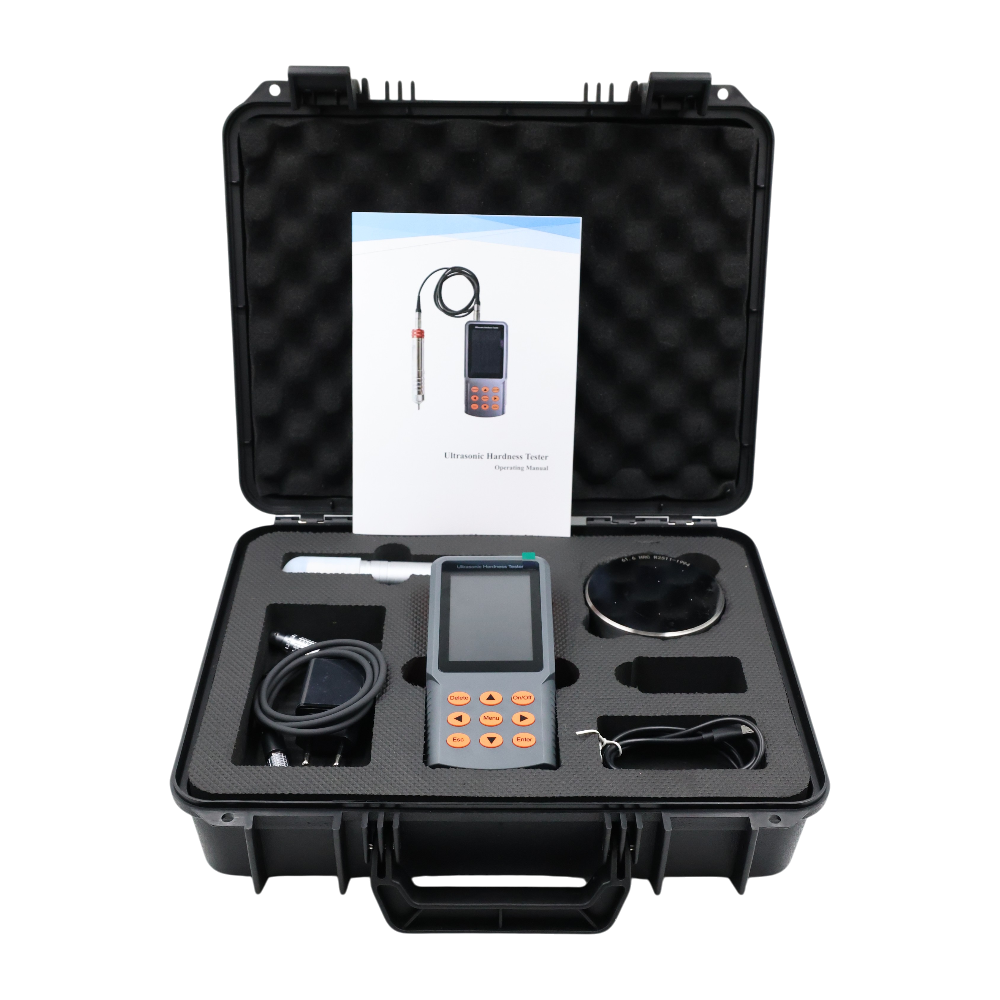
Caltech Instruments Pvt Ltd offers CES 610 - UCI Hardness Tester. It is also known as Ultrasonic Hardness Tester. UCI Hardness Tester are non-destructive testing instruments used to measure the hardness of materials, particularly metals and alloys. These testers utilize the Ultrasonic Contact Impedance (UCI) method, which involves measuring the change in frequency of an ultrasonic signal as it interacts with the material's surface.
Portability & Usability Compact, lightweight design for field use. Interchangeable probes for different applications. Fast measurement cycle (a few seconds per test). Calibration options available for enhanced accuracy
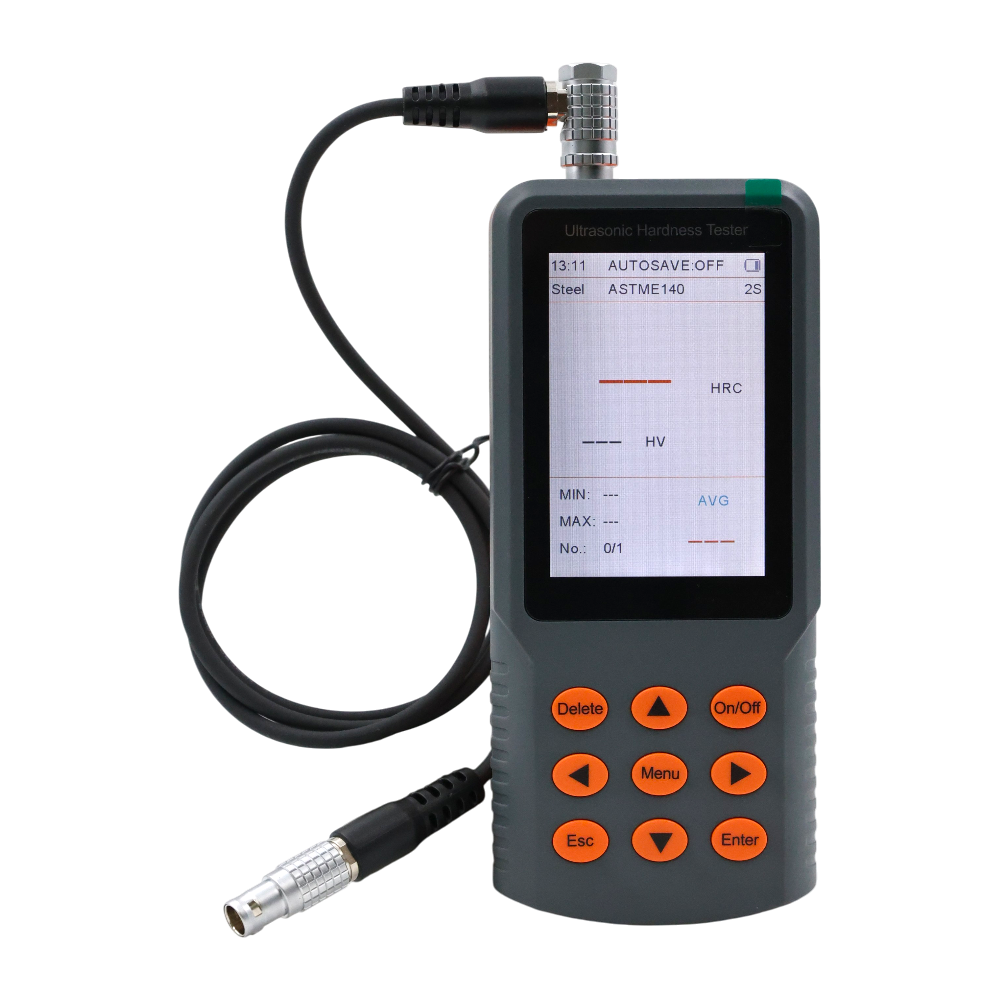
Efficient Digital Measurement SolutionThe UCI Portable Hardness Tester CES 610 provides a reliable digital display, delivering clear and instant feedback for all supported hardness scales. Its superior battery life enables prolonged use without frequent charging, making it an ideal solution for demanding testing environments.
Adaptable Across IndustriesWith a wide measurement range and compact design, the CES 610 is suitable for use in multiple industries, from metal manufacturing to quality control labs. Its portability ensures convenient on-site testing, supporting a variety of inspection and service needs.
FAQ's of UCI Portable Hardness Tester:
Q: How does the UCI Portable Hardness Tester CES 610 operate?
A: The CES 610 utilizes ultrasonic contact impedance (UCI) technology to measure material hardness. Simply press the probe against the test surface, and the digital display will present the hardness value immediately.
Q: What materials and hardness ranges can this tester measure?
A: This tester supports a wide range of hardness scales: HV (50-1599), HRA (61-85.6), HRB (41-100), HRC (20-68), and HB (85-650), covering a broad spectrum of metals and alloys commonly used in industry.
Q: When should I recharge the CES 610's battery?
A: It is recommended to recharge the built-in 3.6V, 3000mAh lithium battery when the device indicates a low battery or after prolonged use, ensuring continuous, reliable operation during inspections.
Q: Where can the CES 610 be effectively used?
A: This portable tester is ideal for both in-field and laboratory settings, making it suitable for quality assurance, maintenance sites, manufacturing facilities, and material service companies.
Q: What is the process for using the CES 610 to measure hardness?
A: Turn on the device, select the desired hardness scale, place the probe firmly on the material's surface, and read the hardness value from the digital display. Repeat as necessary for consistent results.
Q: What are the key benefits of the digital display feature?
A: The digital display provides quick and accurate readings, minimizes interpretation errors, and ensures ease of use even in low-light environments.








 Send Inquiry


 Send Inquiry


 English
 Spanish
 French
 German
 Italian
 Chinese (Simplified)
 Japanese
 Korean
 Arabic
 Portuguese