Cupping Tester About
Cupping Tester
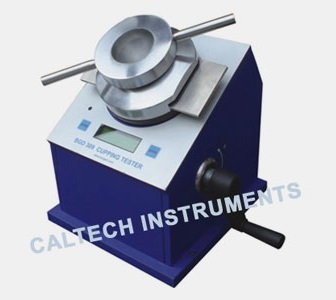
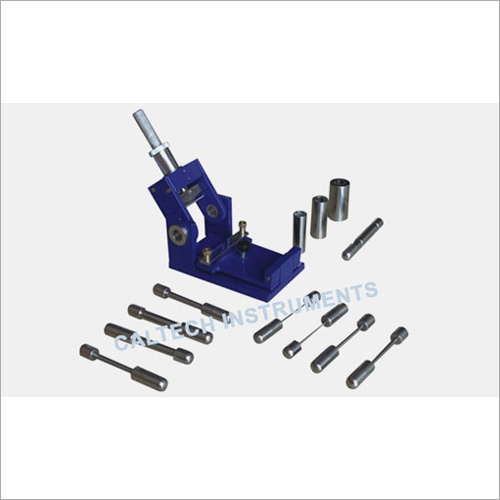
It is used for assessing the cupping ability of coatings applied to metal sheets up to 1.2mm thick. It is applicable to evaluate crack resistance and detachment from the metal substrate of coated surface which is coated with paint, varnish, etc., after the coating layer is deformed gradually under standard condition. The sample panelmax. 1.25mm thick70 mm width, coated min.0.03mmis clamped by an upper wheel and manually cupped by a 20mm hemispherical indenter onto a 27mm die by a drive wheel. The depth to cause failure is indicated on a precise digital display. The results can be easily observed with an illuminated magnifier.
Precision Engineering for Reliable Cupping TestsEngineered with a high precision mechanism, the Cupping Tester delivers accurate, repeatable results. Its analog scale displays cupping depth from 0 to 10 mm, enabling quality evaluation of coated metal sheets as required by industry standards. The devices heavy-duty construction and meticulous surface finish ensure consistent performance in different test environments.
Versatile Applications Across Multiple IndustriesDesigned to support both water-based and solvent-based coatings, the tester is ideal for manufacturers, suppliers, exporters, and service providers in paint, varnish, and metal sheet industries. Its universal clamp and robust build cater to routine laboratory and production-based quality control operations, ensuring optimal coating elasticity and adhesion.
FAQs of Cupping Tester:
Q: How does the Cupping Tester operate for evaluating coated metal sheets?
A: The Cupping Tester is manually driven using a hand wheel, which gradually pushes a 20 mm hemispherical punch into the test sheet clamped by a lever. As the sheet deforms, the analog scale displays the cupping depth, allowing you to assess the resistance and elasticity of coatings in accordance with IS 101 and ISO 1520 standards.
Q: What types of coatings and sheet materials can be tested with this instrument?
A: This tester accommodates both water-based and solvent-based coatings applied to metal sheets. It is compatible with a minimum sheet size of 70 mm x 70 mm and supports thicknesses up to 1.25 mm, making it suitable for paint, varnish, and metal applications.
Q: When is it recommended to use a cupping tester in quality control?
A: A cupping tester is recommended during production and lab testing phases to evaluate coating elasticity, durability, and adherence. Regular use helps ensure that coated metal sheets meet required quality standards and perform reliably in their final applications.
Q: Where can the cupping tester be installed and used?
A: The testers compact dimensions (approx. 350 x 250 x 450 mm) and heavy base allow for easy installation in laboratories, production facilities, and quality control departments. Its rugged, rust-resistant design suits environments across various industries throughout India.
Q: What is the process for performing a cupping test using this device?
A: Select a minimum sample sheet of 70 mm x 70 mm and secure it in the lever-controlled clamp. Rotate the hand wheel to advance the hemispherical punch until the desired depth or specimen failure is achieved. Record the final cupping depth displayed on the analog scale to determine coating performance.
Q: How does the Cupping Tester benefit users in terms of measurement and reliability?
A: With a high-precision analog gauge offering 0.1 mm resolution and a measurement range up to 10 mm, the tester delivers consistent, accurate data for material assessment. Its durable, powder-coated steel construction and manual operation ensure long-term reliability and low maintenance.








 Send Inquiry


 Send Inquiry


 English
 Spanish
 French
 German
 Italian
 Chinese (Simplified)
 Japanese
 Korean
 Arabic
 Portuguese