Impact Tester About
Impact Tester
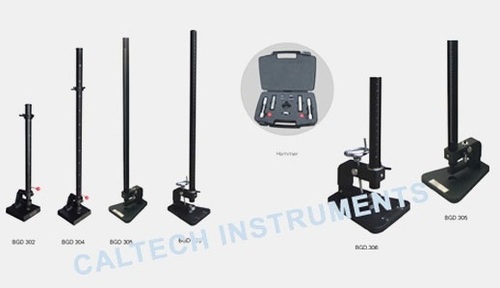
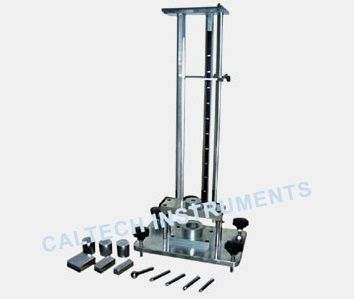
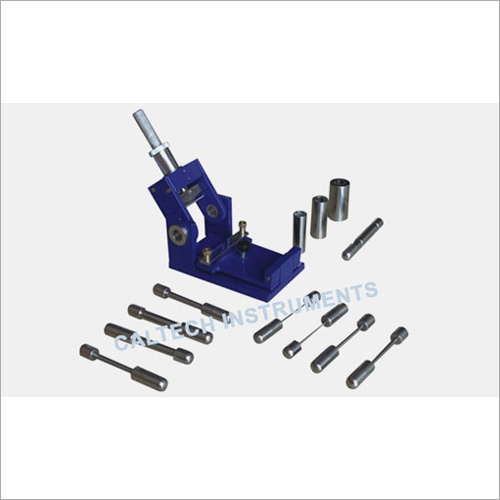
Caltech india offers BGD series Impact Tester. It produced by our company is in accordance with the specification in National Standards determination of paint film resistance to impact and the practical requirement of mechanical construction. The operation principle of the impact tester is by means of a weight that drops down from a specified height and impacts a painted panel under panel under test to result in its rapid deformation, and the film resistance to impact is then attained from observing the film to see if it cracks or peels off.
Advanced Material TestingDesigned for robust impact testing of metals, plastics, and other industrial materials, this equipment provides high accuracy and a broad measurement range. Adhering to rigorous standards (ASTM, IS, BS), it supports laboratory, R&D, and quality inspection environments, enabling confident assessment of material resilience.
User-Focused OperationThe impact tester minimizes user effort and maximizes safety, offering manual and optional automatic operation. Integrated protective enclosure and electro-mechanical locking enhance workplace security. The analog scale delivers immediate, precise results, suitable for high-throughput and routine testing.
Durability and EfficiencyBuilt with a heavy-duty MS fabricated frame and powder-coated finish, the equipment ensures reliability and longevity, even in demanding settings. Low energy consumption and simple floor-mounted installation make it cost-effective and convenient for industrial applications.
FAQs of Impact Tester:
Q: How does the Pendulum Impact Tester measure material toughness?
A: The tester measures material toughness by releasing a pendulum that strikes a specimen (typically 10 mm x 10 mm x 55 mm), and the energy absorbed during fracture is indicated on the analog scale. This provides numeric values to characterize the materials impact resistance.
Q: What types of specimens and materials can be tested with this equipment?
A: The impact tester is suitable for Charpy and Izod notch specimens as per ASTM and IS standards. It can evaluate metals, plastics, and other engineering materials for their resistance to impact forces.
Q: When should this equipment be used in industrial or laboratory settings?
A: It is ideal for use during quality control, material certification, product development, and research phases, wherever precise measurement of impact strength is essential for safety, durability, and compliance.
Q: Where is the Impact Tester typically installed or used?
A: This equipment is floor-mounted and is commonly installed in material testing labs, industrial plants, R&D centers, and inspection agencies requiring standardized impact testing procedures.
Q: What is the process for conducting a test using this device?
A: The specimen is loaded and secured in the chamber, the pendulum is positioned at the set angle, and, depending on preference, released manually or automatically. The devices safety locking system ensures secure operation, and the results are displayed instantly on the analog scale.
Q: How does the protective enclosure and interlocking door mechanism benefit users?
A: These safety features protect the operator from potential hazards during testing, automatically securing the chamber and preventing accidental pendulum release, thus reducing risk and supporting laboratory safety protocols.
Q: What are the advantages of choosing this impact tester for material evaluation?
A: Key benefits include compliance with global standards, high accuracy (1%), user-friendly operation, robust safety mechanisms, versatile specimen compatibility, and dependable results, making it a smart investment for manufacturers, suppliers, and testing professionals in India.








 Send Inquiry


 Send Inquiry


 English
 Spanish
 French
 German
 Italian
 Chinese (Simplified)
 Japanese
 Korean
 Arabic
 Portuguese