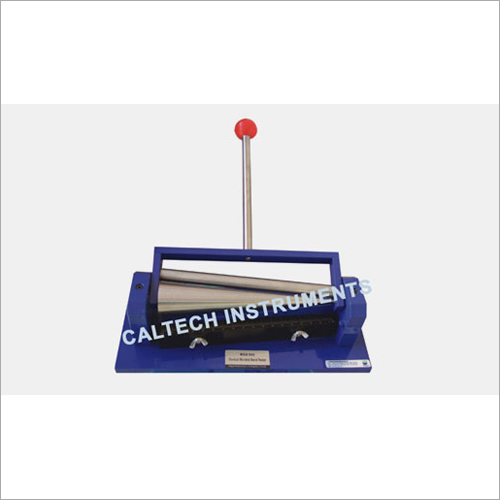
About Cylindrical Mandrel Bend Tester
Technical Specification.
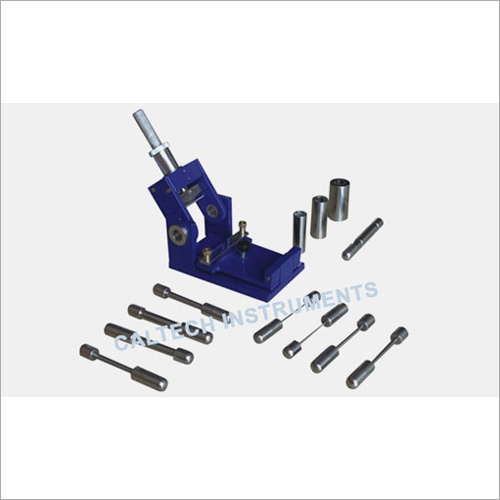
- Robust stainless steel mandrels, easy to install in seconds
- Sturdy pre-drilled frame ready to secure on workbench.
- Shaft stick diameter: 2mm, 3mm, 4mm, 5mm, 6mm, 8mm, 10mm, 12mm, 16mm, 20mm, 25mm, 32mm
- Thickness of bottom material for the test plate: 50mm width and thickness is less than 1.0mm
Versatile Testing SolutionDesigned to meet multiple international standards, the Cylindrical Mandrel Bend Tester provides a wide testing range for coated steel panels, ensuring accurate flexibility and adhesion results to support quality assurance processes in paint and coating applications.
Ergonomic and Durable ConstructionFinished with powder coating or chrome plating for enhanced corrosion resistance, the unit includes stainless steel and plated mild steel rods. Its sturdy manual lever system and portable bench-top profile facilitate reliable operation in various industrial environments.
Comprehensive Accessories IncludedSupplied with a full set of 14 mandrels, a panel holder, and an operating manual, this tester ensures readiness for immediate use. Its analog visual inspection method enables quick assessment without the need for electrical power, streamlining workflow.
FAQs of Cylindrical Mandrel Bend Tester:
Q: How does the Cylindrical Mandrel Bend Tester evaluate coating flexibility?
A: The tester assesses the flexibility of coatings by bending coated steel panels over mandrels of varying diameters (2 mm to 32 mm), observing coating cracks or adhesion failure as per ASTM D522 and ISO 1519 standards.
Q: What is the process for conducting a test using this equipment?
A: To conduct the test, place the sample panel in the holder, select the appropriate mandrel size, and manually rotate the lever to bend the panel over the mandrel. Inspect for cracks or detachment using visual methods, following standard procedures outlined in the supplied manual.
Q: Where can this tester be used?
A: The Cylindrical Mandrel Bend Tester is suitable for laboratories, manufacturing floors, quality control departments, and research centers involved in coatings and paint evaluation. Its portable, bench-top configuration enables flexible deployment at various locations.
Q: What are the benefits of using a manual lever-driven tester with multiple mandrels?
A: Manual operation provides precise control during testing, while the set of 14 mandrels facilitates compliance with global standards and analysis over a wide range of coating flexibility requirements. No electrical supply is needed, simplifying maintenance and setup.
Q: When should the tester be used during paint and coating evaluation?
A: This tester is most effective during routine quality control, product development, or when certifying products for standard compliance. It can be used whenever coating adhesion and flexibility validation are required on coated steel substrates.
Q: What materials are compatible with this bend tester?
A: The device is designed for coated steel test panels, making it ideal for assessing paint and coating applications on ferrous substrates as per standard requirements.
Q: How do the corrosion-resistant finishes enhance operational longevity?
A: Powder-coated or chrome-plated frames, coupled with stainless steel and plated mild steel rods, ensure the tester withstands regular laboratory use without degradation, offering reliable performance and extended service life.








 Send Inquiry


 Send Inquiry


 English
 Spanish
 French
 German
 Italian
 Chinese (Simplified)
 Japanese
 Korean
 Arabic
 Portuguese