About Programmable Viscometer
Programmable Viscometer
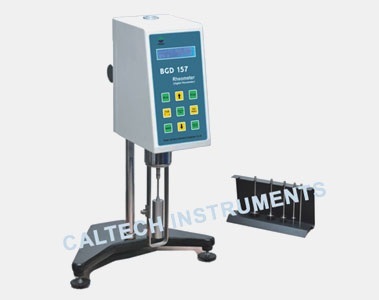
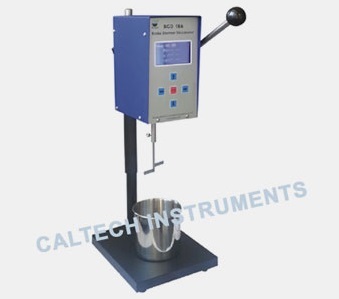
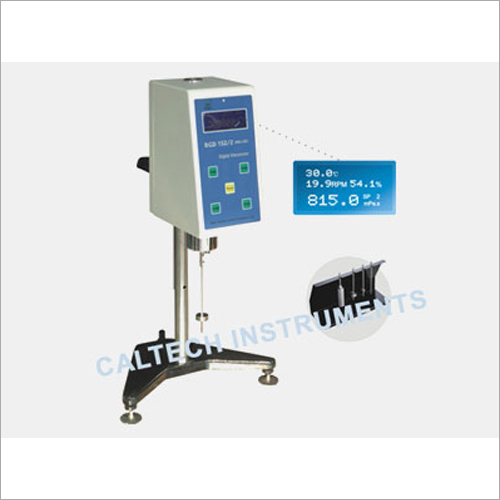
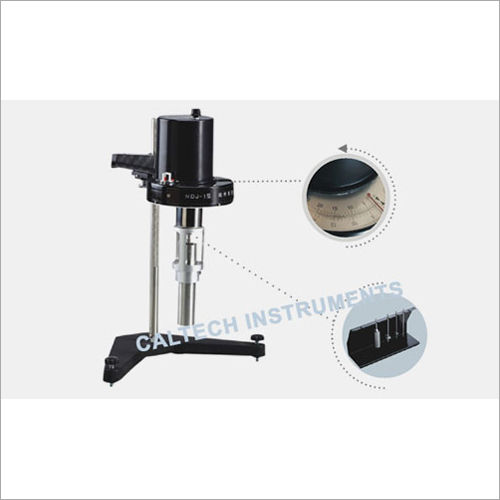
Caltech India offers Programmable Viscometer. This programmable viscometer is the most universal viscometer in the world. It is a great favorite of customers for the high cost-performance. It offers state-of-the-art functions and performances in-line with similar styles of meters and features a backlit LCD digital display, 16 bit micro-computer and a highly accurate stepper motor. The meter is stable and accurate in motion, programmable in design and easy to use.
Advanced Measurement TechnologyThis programmable viscometer utilizes a rotational spindle sensor and a microprocessor-based controller to deliver exceptional precision and repeatability (0.5%). Its auto-stop function and overload protection optimize safety and minimize operational errors, making it suitable for a wide range of industries.
Intuitive Operation and Versatile ConnectivityThe large backlit LCD with multi-parameter display ensures users can easily monitor and control their measurements. Data storage capacity for up to 1000 results and included analysis software enable comprehensive data management, while RS232/USB interfaces offer seamless integration with computers for data transfer and remote analysis.
Reliable Performance and Build QualityConstructed with a stainless steel and ABS housing, the viscometer is robust and resilient for continual usage. Operating at a typical sample volume of 600 ml and a wide temperature range (5C to 80C), it accommodates diverse laboratory and industrial environments. Its high accuracy (1% of full scale) ensures dependable results every time.
FAQs of Programmable Viscometer:
Q: How does the programmable viscometer achieve accurate viscosity measurements?
A: The viscometer uses a rotational spindle sensor and a microprocessor-based controller to regulate speed precisely across the selectable range (0.1 to 100 rpm). Multiple spindle options and high-resolution measurement (0.01 mPas) ensure accuracy (1% of full scale) for various media including liquids, oils, slurries, and pastes.
Q: What is the process for performing a viscosity test with this device?
A: To conduct a test, users select the spindle and set the spindle speed via the intuitive interface. After placing a typical 600 ml sample, measurements appear on the large LCD. The auto-stop function ceases operation when the test completes, and results can be stored (up to 1000) for later analysis using the included software.
Q: Where is this viscometer commonly used in India?
A: This equipment is widely utilized in laboratories, quality control departments, and research facilities across industries such as chemicals, food processing, pharmaceuticals, paints, and lubricants. Manufacturers, exporters, dealers, and service providers in India rely on its precise viscosity measurements.
Q: How can I benefit from the viscometers data analysis and storage features?
A: With onboard data storage for up to 1000 results and included analysis software, users can efficiently track, compare, and report measurements. Connectivity through RS232/USB permits easy data transfer to computers, facilitating streamlined workflows and improved decision-making.
Q: What should I consider for optimal usage and maintenance of the viscometer?
A: It is important to operate the device within its specified temperature (5C to 80C) and humidity (80% RH) ranges, using appropriate sample volumes and spindle types for target viscosity levels. Regular cleaning of spindles and proper handling of the stainless steel and ABS structure help maintain performance and longevity.
Q: When should I use the auto-stop function during viscosity measurement?
A: The auto-stop function is designed to automatically halt the measurement process once the test is complete, safeguarding both the instrument and the sample. This feature is particularly useful during unattended or repetitive measurements to reduce errors and protect the equipment from overload or overheating.
Q: What are the advantages of the multi-parameter LCD display?
A: The large, backlit LCD provides clear visibility of real-time viscosity readings, spindle speed, temperature, and other parameters. This allows users to closely monitor operating conditions and ensures measurements are conducted within precise specifications for optimal results.








 Send Inquiry


 Send Inquiry


 English
 Spanish
 French
 German
 Italian
 Chinese (Simplified)
 Japanese
 Korean
 Arabic
 Portuguese